
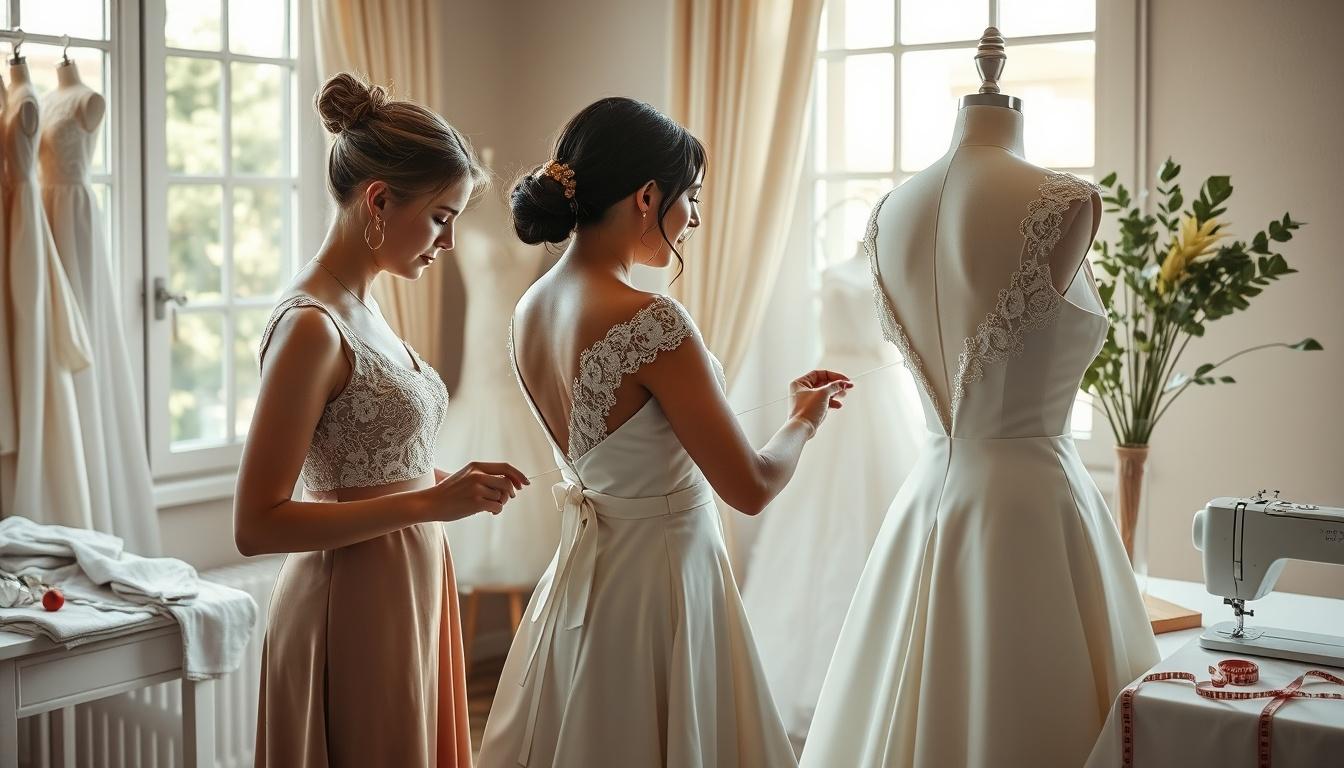
What to Expect from a Bridal Fitting Plan
Every project starts with an assessment of the dress construction, fabric, and requested fit. That review helps define what can be adjusted, what should be left unchanged, and how the alterations should be staged.
For bridal work, the fitting plan is usually completed in two to three appointments, with the first fitting used to confirm the scope and outline the next steps. A deposit is taken before work begins, and the schedule is set around the confirmed event date.
Measured planning, staged fittings, and clear deadlines
Bridal and occasionwear alterations are built around the garment, the fabric, and the event date.
Common requests include hem and train adjustment, bodice and strap refitting, and bustle and fastening adjustment. Occasion dresses may also need shaping, length changes, or careful refinements to improve comfort and movement.
Matching thread or trim is used where available, but material availability must be checked first. Final collection includes a last fit check, and any small adjustment is handled according to the agreed alteration plan.